














 +971 52 193 88 88
 +7 925 283 88 88
An electric rental costs less to run per kilometre in Dubai than a petrol car of the same class, but the difference is small next to the daily rate. Here are the numbers, using November 2026 fuel prices and DEWA charging tariffs.
EV or Petrol: What Actually Differs in Dubai
The two experiences are closer than they sound. Whichever you pick, you get no deposit, basic insurance built into the daily rate and a handover in about 20 minutes. Electric cars are handed over charged, with everything you need to plug in at Dubai’s public chargers. Salik and Darb tolls are billed to you separately after the rental ends either way, and the mileage limit shown on each car’s page applies regardless of what is under the bonnet.
The differences sit in three places: what you pay to keep the car moving, how long it takes to top up, and how far a full tank or a full battery actually takes you once Dubai’s heat is factored in. The next sections take each in turn, comparing the electric cars in our fleet with the far larger petrol range.
| Factor | Electric | Petrol |
|---|---|---|
| Insurance and mileage limit | Same terms, set per car | Same terms, set per car |
| Salik and Darb | Billed after rental | Billed after rental |
| Energy cost per 100 km | Usually lower (see table below) | Usually higher (see table below) |
| Time to refill from low | 30–60+ minutes on a fast charger | 5 minutes at any petrol station |
| Where to refill outside Dubai | Charging points thin out fast | Petrol stations everywhere |
| Fuel or charge at return | Our team explains charging at pickup | Full tank out, full tank back |
Running Costs: Fuel vs Charging by the Numbers
The UAE’s Fuel Price Committee reviews pump prices every month in line with global energy markets. For November 2026, Super 98 is AED 4.16 a litre and Special 95 is AED 4.04, AED 0.24 less than in October. October itself was a sharp rise on September’s AED 3.80 and AED 3.69. We calculate with Super 98 below; Special 95 comes out about 3% cheaper. A compact-to-mid petrol sedan burning a typical 7–9 litres per 100 km costs roughly AED 29–37 to cover that distance. A big V8 or V12 SUV or saloon, which typically burns 14–20 litres per 100 km in real city driving, costs closer to AED 58–83.
Charging works on a different meter. Since September 2024, DEWA’s EV Green Charger tariff has stood at AED 0.70 per kWh plus VAT on standard AC chargers and AED 1.20 per kWh plus VAT on fast DC chargers, which is AED 0.735 and AED 1.26 per kWh once 5% VAT is added. This is the minimum fee set for public charging in the UAE, so other operators may charge more: check the price in the app before you plug in. A mid-size EV using a typical 18–22 kWh per 100 km costs about AED 13–16 on AC or AED 23–28 on DC fast charging. A larger, heavier EV, such as a full-size electric SUV drawing 26–32 kWh per 100 km, lands around AED 19–24 on AC or AED 33–40 on DC.
| Vehicle type | Typical consumption | Cost per 100 km |
|---|---|---|
| Compact-to-mid petrol sedan | 7–9 L/100 km | AED 29–37 |
| Large petrol V8/V12 SUV or saloon | 14–20 L/100 km | AED 58–83 |
| Mid-size EV, AC public charging | 18–22 kWh/100 km | AED 13–16 |
| Mid-size EV, DC fast charging | 18–22 kWh/100 km | AED 23–28 |
| Large EV SUV, AC charging | 26–32 kWh/100 km | AED 19–24 |
| Large EV SUV, DC fast charging | 26–32 kWh/100 km | AED 33–40 |
Even on fast DC charging, an EV usually comes out level with or cheaper than a comparable petrol car. On slower AC charging, which is what most public and hotel chargers offer, it is two to three times cheaper per kilometre.
Helpful tipBudget on the DC fast-charging price, not the AC one, unless you know you will have time to plug in for an hour or more. A quick top-up between errands usually means a fast charger, so that is the realistic number for a short rental.
Alex Shvarov, Automotive expert with over 15 years of experience
What a Typical Trip Costs
Take a three-day rental with about 400 km in total: city driving plus a couple of runs out of town. The energy bill for a large SUV then looks like this (an estimate built from the class averages above, not from any single car’s spec sheet).
| Vehicle type | Typical consumption | Energy cost for 400 km |
|---|---|---|
| Large petrol SUV, Super 98 | 14–20 L/100 km | AED 233–333 |
| Large EV SUV, AC charging | 26–32 kWh/100 km | AED 76–94 |
| Large EV SUV, DC fast charging | 26–32 kWh/100 km | AED 131–161 |
Over the whole trip the gap between an EV and a petrol SUV is roughly AED 70–260, depending on how you charge. That is a small fraction of one day’s rate for any car in our picks below, so energy cost should not be what decides it. The car you want, your route and where you can charge matter more.
Where to Charge an EV During Your Rental
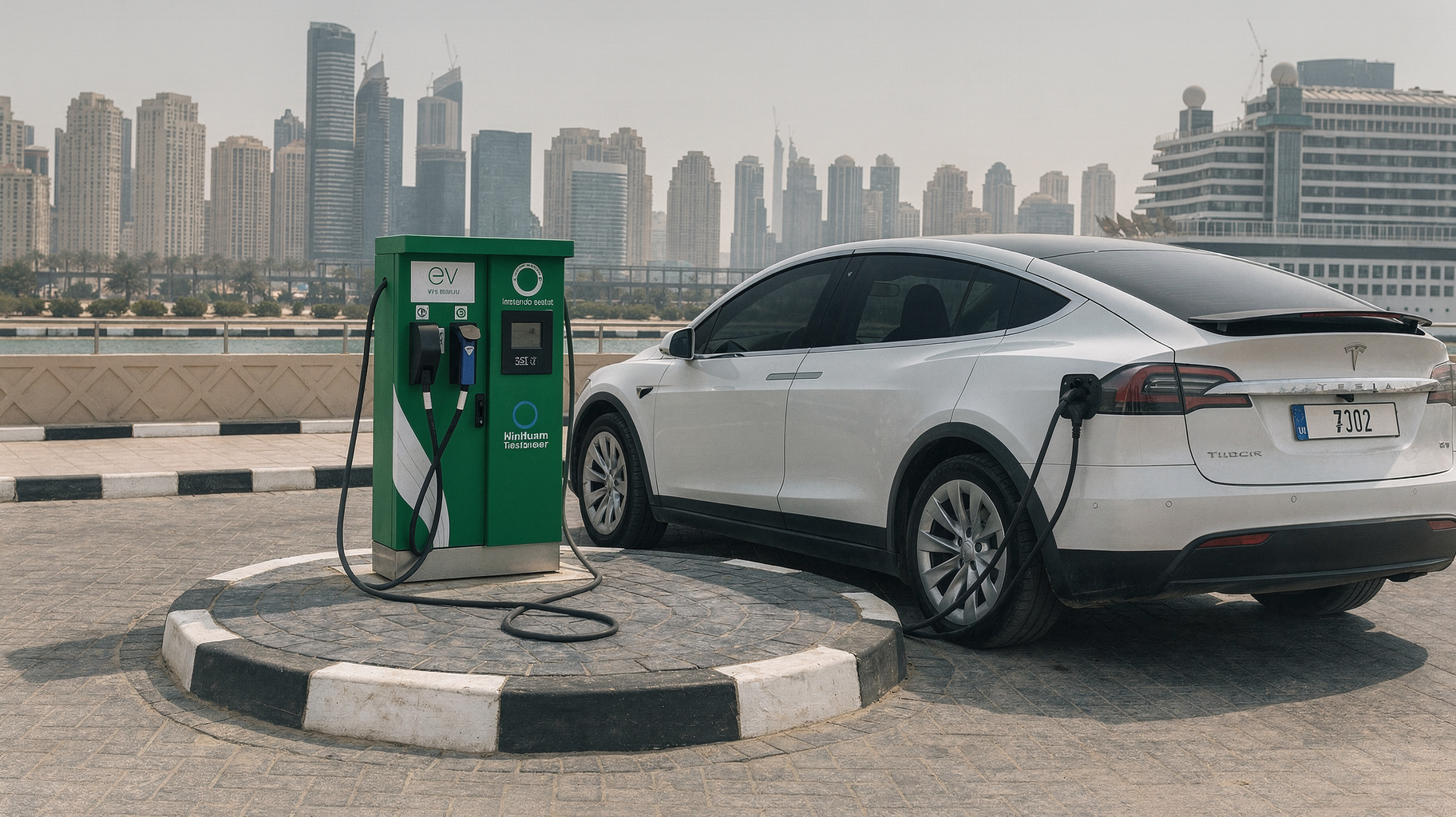
Dubai’s public charging network has grown fast. DEWA’s EV Green Charger scheme passed 1,860 charging points in January 2026 and reached 2,826 by the end of September 2026, spread across malls, car parks, petrol stations and residential buildings. You start a session in the DEWA app; the DEWA charger map shows where the points are, and the DEWA EV charging page explains how registration and guest access work. Other operators run their own networks with their own apps and prices.
Tesla Superchargers and hotel chargers
Tesla also runs its own Supercharger network in central Dubai, including the Dubai Mall Za’abeel station, open 24/7 with up to 250 kW. Which networks and chargers you can use depends on the car you rent, so our team explains charging when you pick it up. Some hotels in Downtown, Marina and JBR also have chargers for guests, so it is worth asking when you book.
Helpful tipPlan charging stops the way you would plan a lunch break, not a refuelling stop. Pick a mall or hotel where you have something to do for 20–40 minutes, rather than hunting for the fastest possible top-up on the way somewhere.
Alex Shvarov, Automotive expert with over 15 years of experience
Does Dubai’s Heat Cut Into EV Range
Yes, measurably, though modern EVs are built to manage it. A 2025 peer-reviewed study in Applied Energy analysed more than 345,000 trips by electric vehicles in Phoenix, Arizona, a desert city, and found total energy consumption about 28% higher at 46–50°C than in a mild 26–30°C band, with a range reduction of up to around 16%. Dubai’s summer days usually sit a little below that hottest band, at 40–45°C, but the same effects apply. The extra draw comes from two places at once: stronger cabin air conditioning, and the battery’s thermal-management system keeping the cells inside a safe temperature window.
Manufacturers test for exactly this. Tesla has published its own extreme-heat testing of the Model S, 3, X and Y, covering the air conditioning, battery cooling and Supercharging:
For a renter, the practical upshot is modest rather than alarming: expect a hot-weather EV to show somewhat less range on the display than its cooler-weather number, in roughly the same way a petrol car’s fuel economy worsens with the air conditioning working overtime in summer.
Helpful tipIf you can, pre-cool the cabin while the car is still plugged in, before you unplug. Climate control powered by the charger, not the battery, is one of the simplest ways to protect range on a hot afternoon.
Alex Shvarov, Automotive expert with over 15 years of experience
Tolls, Insurance and Mileage: No Difference
None of the terms that usually worry renters change with the powertrain. Salik and Darb charges are billed to you separately after the rental ends, exactly as with a petrol car. Since June 2026 a Salik gate costs AED 6.30 at peak times and AED 4.20 off-peak and on Sundays, VAT included (see Salik’s toll rates), while Abu Dhabi’s Darb gates have their own fees. Basic insurance is included in the daily rate, and the same included cover applies to electric and petrol cars; extended cover is available for an extra fee. The excess and what the cover excludes are set out in your rental agreement and in our terms and conditions. Each car has its own daily mileage limit (200–250 km, shown on the car page), and it adds up over the rental: two days at 200 km give you 400 km to use as you like. Extra kilometres are charged separately.
Which One Fits Your Trip
For a city stay centred on Downtown, Marina, JBR or Business Bay, an EV is an easy choice: charging points are dense in exactly those areas, the running cost per kilometre is lower, and the driving experience of instant torque and a near-silent cabin suits stop-start city traffic well. For a longer day out, say along the coast toward Fujairah or inland to Hatta, a petrol car removes the one variable that can derail a trip: charging points thin out once you leave the city, while a petrol station is never more than a few minutes away.
If what you want is the driving experience itself, both sides of our luxury cars fleet deliver it in different ways. A big naturally aspirated or twin-turbo petrol V8 still has the sound and the gear-change drama that no EV reproduces. An EV answers with instant, silent acceleration that can out-launch cars costing far more, which is useful to know if 0–100 time is what you are chasing.
Our Picks: Electric and Petrol Cars to Rent
Four cars from our current fleet show the range on both sides, from an everyday electric SUV to a full-size petrol flagship. Prices on the site apply to rentals starting within the next 30 days; seasonal rates may apply to later dates, and current offers are in Special Offer.
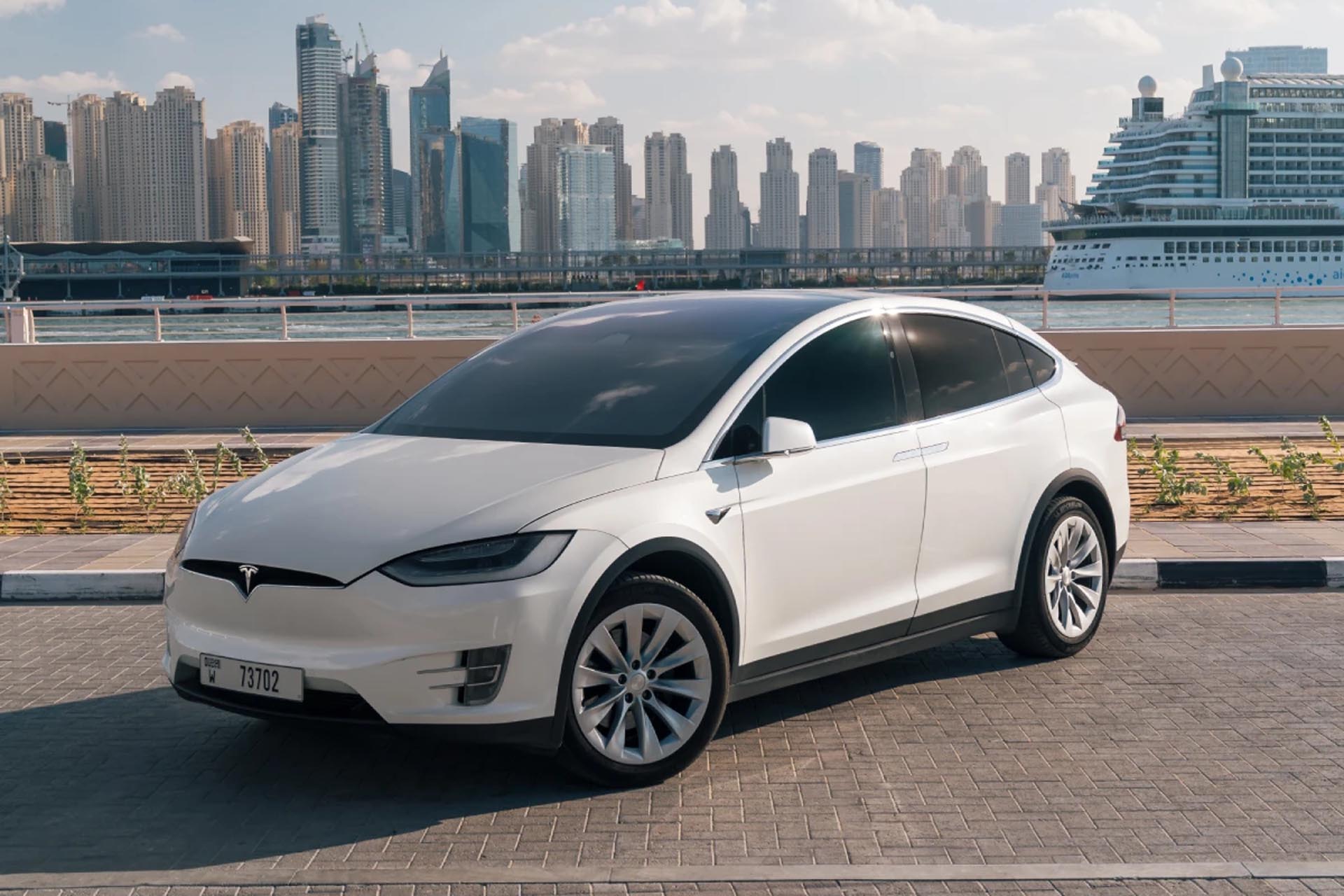
Tesla Model X: the everyday EV
for 1–2 days, AED 1 999 a day for 30+ days, minimum age 25, minimum 5 years of driving experience.

Falcon-wing doors and a quiet, roomy cabin make this one of the easiest EVs to live with for a week in the city. Ask our team about charging when you pick it up, and see the whole Tesla range.
Rolls-Royce Spectre: EV without compromise
for 1–2 days, AED 5 100 a day for 30+ days, minimum age 25, minimum 5 years of driving experience.
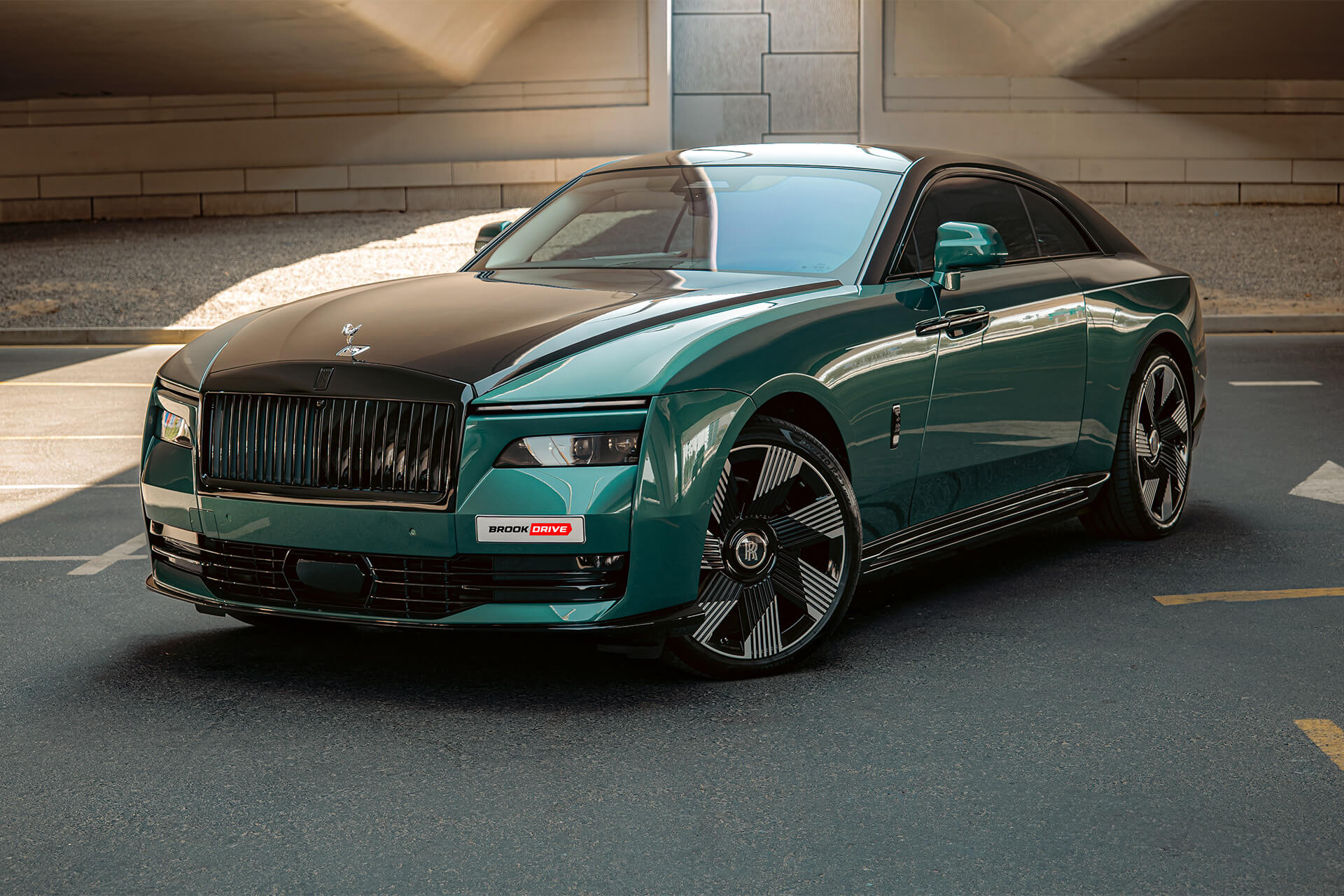
The Rolls-Royce Spectre is an electric grand-touring coupe: silence and instant torque in a body with full occasion-car presence.
Range Rover HSE: the petrol all-rounder
for 1–2 days, AED 1 090 a day for 30+ days, minimum age 25, minimum 5 years of driving experience.
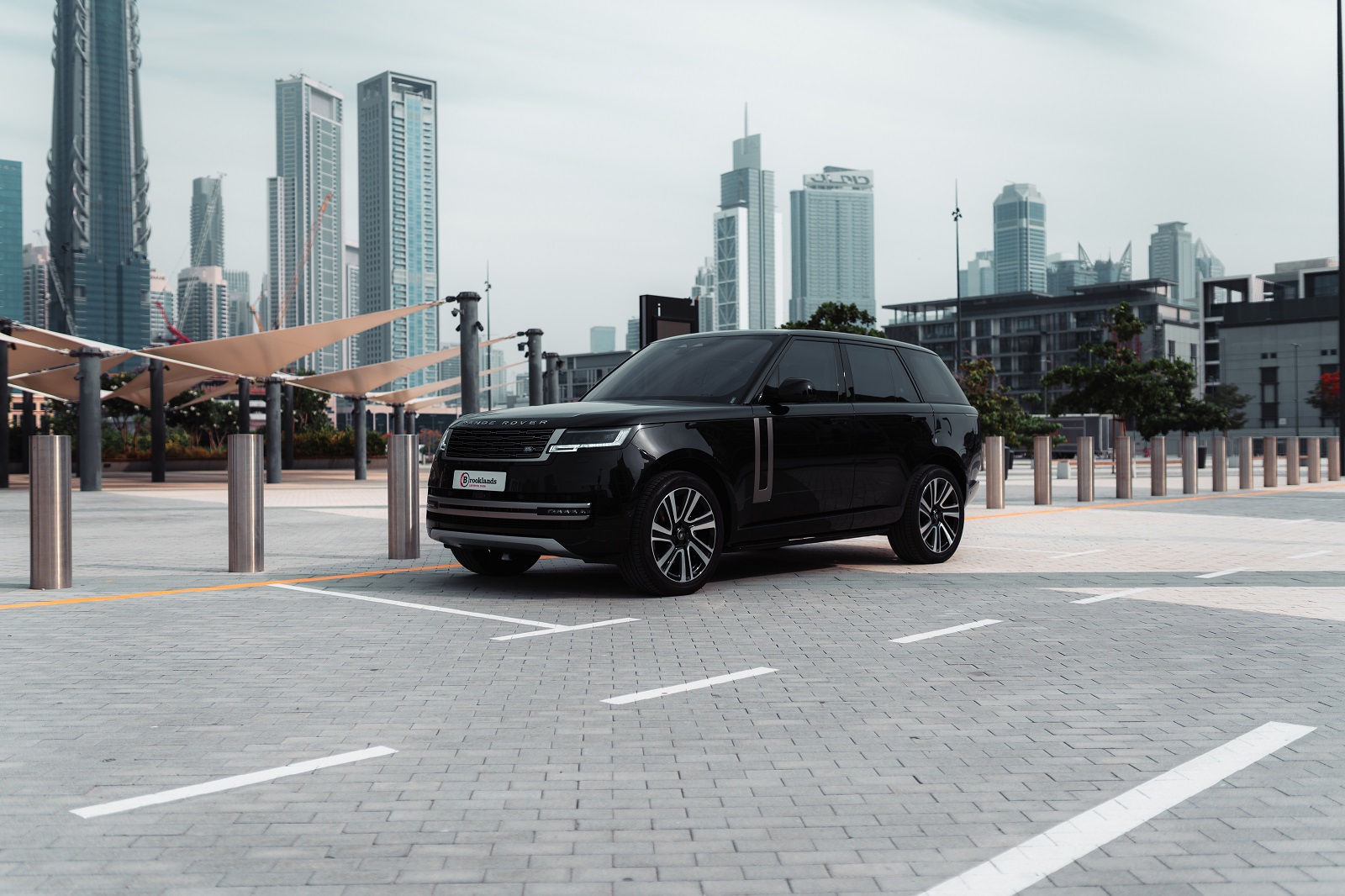
A straightforward Range Rover with a five-minute refuel anywhere in the UAE, built for the longer out-of-town drives where an EV needs more planning.
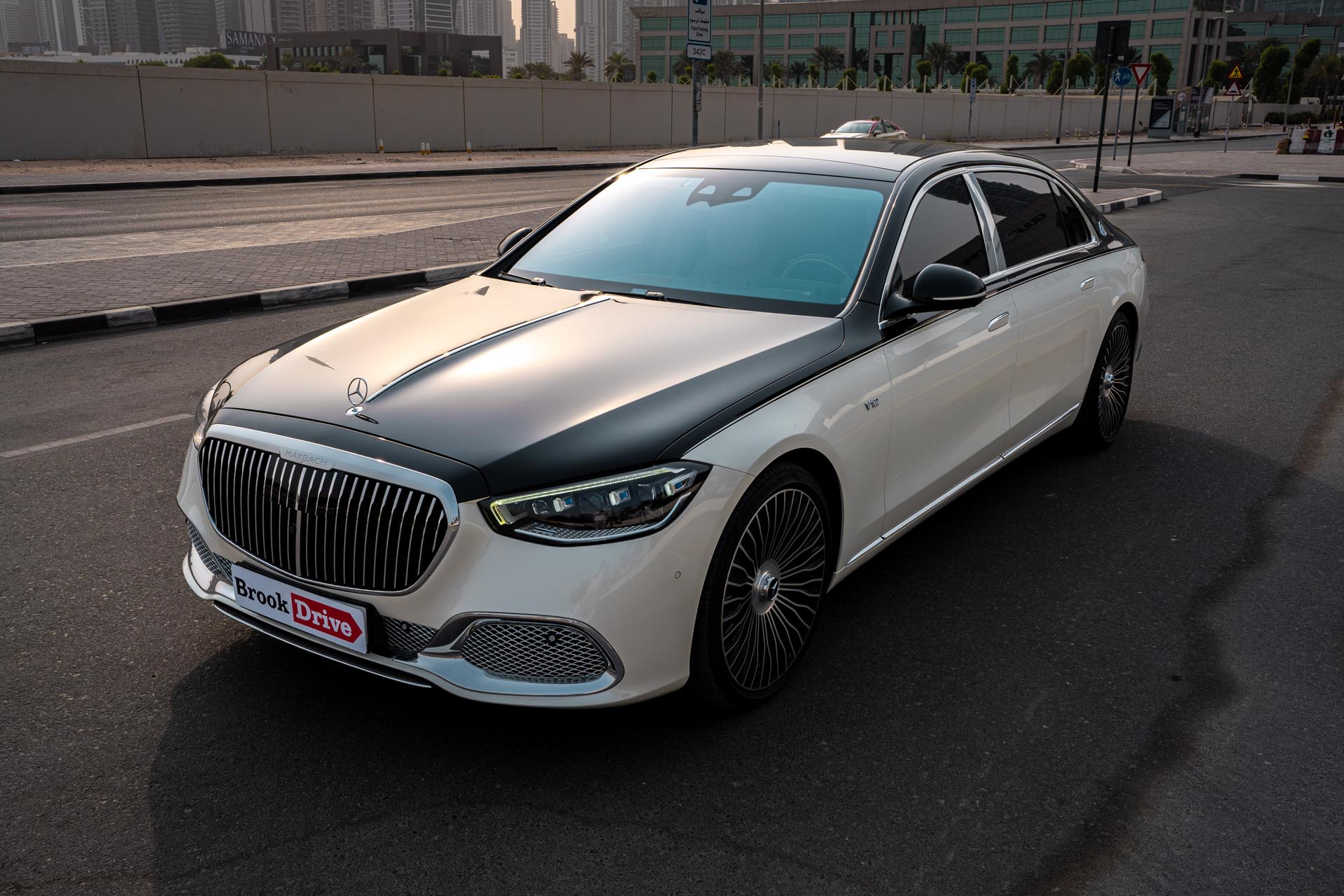
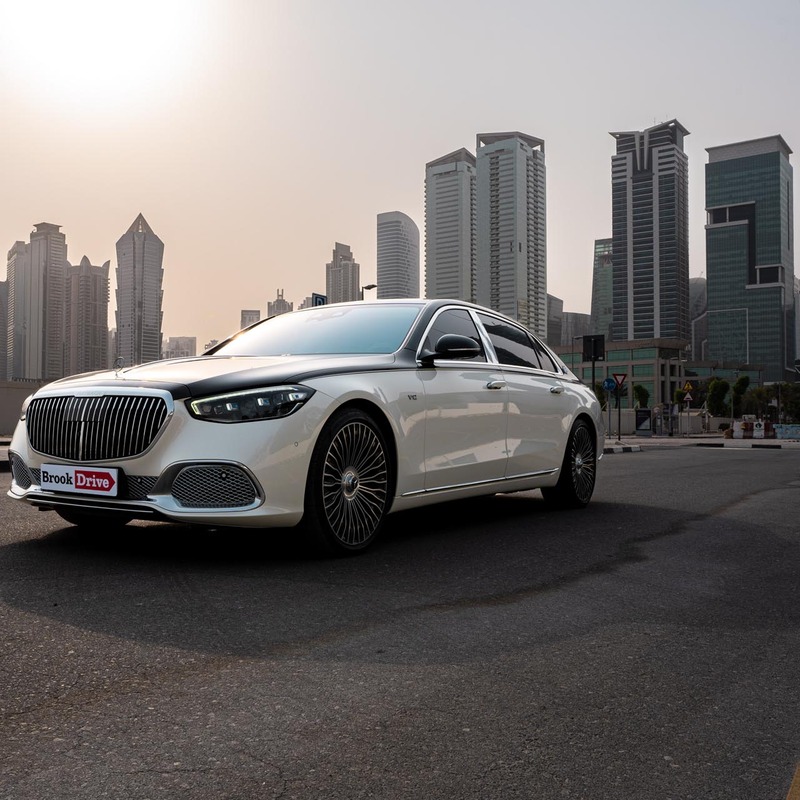
Mercedes-Maybach S680: petrol flagship
612 PS, 0–100 km/h in 4.5 sec. AED 2 600 a day for 1–2 days, AED 2 400 a day for 30+ days, minimum age 25, minimum 3 years of driving experience.
A 6.0-litre twin-turbo V12 that most EVs cannot answer for sound and character; the Mercedes S-Class line is where that experience lives in our fleet.
VerdictDefault to electric for anything that stays inside Dubai’s city limits, and to petrol the moment your plans include a longer drive out of town. Among our picks, the Model X and the Range Rover are the two to compare if cost and convenience matter; the Spectre and the Maybach are for when the experience comes first and running cost is almost beside the point.
Alex Shvarov, Automotive expert with over 15 years of experience

Automotive expert with over 15 years of experience in the premium and sports car industry. I specialize in luxury vehicle selection, performance analysis, and creating exceptional driving experiences for discerning clients.
FAQ
Is it cheaper to rent an electric car in Dubai?
Usually, per kilometre driven. At November 2026 prices, charging a mid-size EV on a standard DEWA AC charger costs roughly AED 13–16 per 100 km, against AED 29–37 for a comparable petrol sedan and AED 58–83 for a large petrol SUV. Even on a faster, pricier DC charger, EVs typically come out level with or cheaper than petrol. The daily rental rate itself depends on the specific car, not the fuel type.
Where can I charge a rental EV in Dubai?
DEWA’s EV Green Charger network covers malls, car parks and petrol stations across the city, with 2,826 points at the end of September 2026. Tesla also runs its own Supercharger stations, including at Dubai Mall Za’abeel, and some hotels offer guest charging. Our team explains charging for your car when you pick it up.
Do Salik and Darb apply to electric rental cars?
Yes, identically to petrol cars. Salik and Darb tolls are billed to the renter separately after the rental ends, regardless of what powers the car.
Does Dubai’s heat reduce EV driving range?
It can. A 2025 Applied Energy study of real-world EV trips in Phoenix, Arizona, a desert city, found energy consumption about 28% higher at 46–50°C than in a mild 26–30°C band, with a range drop of up to around 16%. Dubai’s summer days are usually a little cooler than that band, and modern EVs manage the heat with battery and cabin thermal-management systems, so the effect shows on the range display rather than disrupting a normal day’s driving.
Can I drive a rental EV outside Dubai?
Within the UAE only: trips outside the country, including to Oman, are not permitted on any of our rentals. Charging points are sparser once you leave the main cities, so a longer out-of-town drive is usually more relaxed in a petrol car.
Is insurance different for an electric rental car?
The same included basic cover applies to electric and petrol cars: basic insurance is part of the daily rate, and extended cover is available for an extra fee. The excess and what the cover excludes are set out in your rental agreement.