









 +971 52 193 88 88
 +7 925 283 88 88
Top 10 Best Sounding Cars (Ranked by Acoustic Brilliance)
| # | Car Model | Engine Configuration | Aspiration | Maximum RPM | Signature Sound Profile |
|---|---|---|---|---|---|
| 1 | Lexus LFA | 4.8L V10 (72°) | Naturally Aspirated | 9,000 rpm | Formula 1-derived high-frequency shriek with Yamaha-tuned harmonic precision |
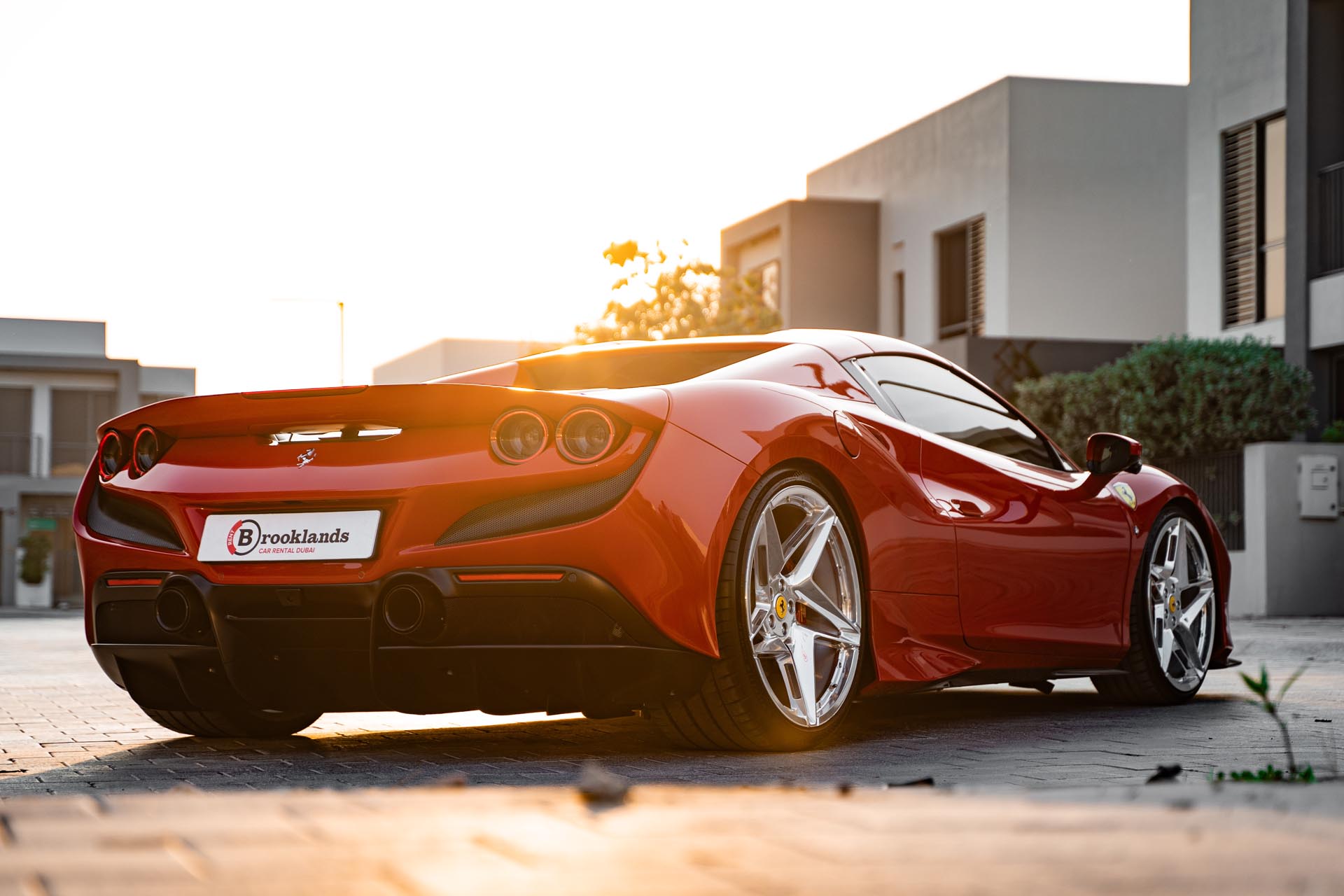
| 2 | Ferrari 458 Italia | 4.5L Flat-Plane V8 | Naturally Aspirated | 9,000 rpm | Pure, rising mechanical howl transitioning to a piercing top-end scream |
| 3 | Porsche 911 GT3 | 4.0L Flat-Six | Naturally Aspirated | 9,000 rpm | Rhythmic, pulsating motorsport wail built on decades of rear-engine refinement |
| 4 | Jaguar F-Type R | 5.0L V8 | Supercharged | 6,500 rpm | Aggressive low-frequency baritone with violent crackles and pops on overrun |
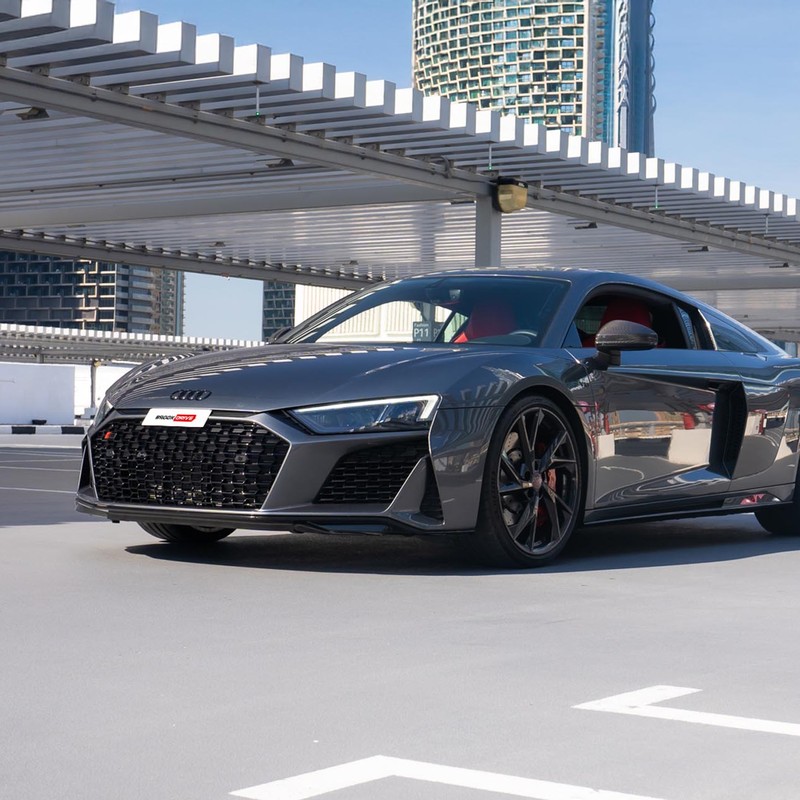
| 5 | Audi R8 V10 | 5.2L V10 | Naturally Aspirated | 8,700 rpm | Bass-heavy growl at low revs climbing to a high-frequency motorsport scream |
| 6 | Pagani Zonda | 6.0–7.3L AMG V12 | Naturally Aspirated | 7,000 rpm | Ear-splitting, theatrical F1-style wail through a hydroformed Inconel exhaust |
| 7 | Aston Martin V12 Vantage | 5.9L V12 | Naturally Aspirated | 6,500 rpm | Deep, resonant baritone bellow balancing grand tourer elegance with raw aggression |
| 8 | Ford Mustang Shelby GT350 | 5.2L Flat-Plane V8 «Voodoo» | Naturally Aspirated | 8,250 rpm | Raspy, high-revving rasp bridging American muscle and European exotic character |
| 9 | Lamborghini Aventador LP 780-4 Ultimae | 6.5L V12 | Naturally Aspirated | 8,500 rpm | Violent, raw mechanical roar representing the last unfiltered NA V12 |
| 10 | Alfa Romeo 8C Competizione | 4.7L Cross-Plane V8 | Naturally Aspirated | 7,500 rpm | Deeply emotional, resonant Italian tenor with a muscular grand-touring character |
1. Lexus LFA (The Yamaha-Tuned V10 Symphony)
The Lexus LFA holds the global benchmark for the finest production car acoustic profile. Its 4.805-liter naturally aspirated V10 — designated 1LR-GUE and built on a 72-degree bank angle — revs to a 9,000 rpm maximum engine speed, with a hard fuel-cut rev limiter set at 9,500 rpm. This powerplant produces a razor-sharp, F1-like scream that remains unmatched. The engine utilizes equal-length exhaust manifolds and Dual VVT-i technology, ensuring that the exhaust pulses remain perfectly phase-aligned as they exit the combustion chambers.
Yamaha’s acoustic division co-developed the engine resonance alongside Toyota’s mechanical engineering team. The 72-degree V10 architecture generates ten evenly spaced firing events per 720-degree crank rotation, creating an extremely dense exhaust pulse train. At 8,700 to 9,000 rpm, the pulse repetition rate pushes dominant harmonics into the kilohertz range — the exact frequency band where human hearing registers maximum sensitivity. Equal-length headers reinforce specific frequencies rather than smearing them, optimizing intake and exhaust resonance to emphasize the most audible harmonics.
2. Ferrari 458 Italia (Naturally Aspirated V8 Masterpiece)
The Ferrari 458 Italia delivers an intoxicating, singing exhaust note that balances aggression with mechanical sophistication. Its 4.5-liter naturally aspirated V8 utilizes a flat-plane crankshaft, revving to 9,000 rpm to produce 570 horsepower and 540 Nm of torque at 6,000 rpm. Because the flat-plane crank alternates firing events between banks at perfectly even 180-degree intervals, each exhaust manifold receives regular, phase-aligned pulses. This geometry forms the mechanical foundation of the engine’s sharp, rising scream.
Ferrari’s engineering documentation confirms this design drew directly from Formula 1 development philosophy, optimizing low-inertia, racing-style internals for high-rpm efficiency. Unlike modern turbocharged successors — including the acoustically refined Ferrari 488 and Ferrari F8 — that trade immediate acoustic intensity for boost delivery, the 458’s sound scales purely with airflow and engine speed. The note remains urgent and metallic all the way to the redline, avoiding the flatter, muted tones typical of forced-induction engines.
3. Porsche 911 GT3 (High-Revving Flat-Six)
Equipped with a 4.0-liter naturally aspirated flat-six, the Porsche 911 GT3 reaches a 9,000 rpm redline, producing a majestic high-revving wail that defines rear-engine acoustic identity. Opposed cylinders generate a symmetrical vibration pattern, delivering a characteristic rhythmic, pulsating exhaust note. Porsche engineers have refined this flat engine note across multiple generations of competition machinery, culminating in models like the 992 GT3 RS, which delivers a hard-edged, race-car-like howl that builds aggressively at high revs.
The acoustic intensity sharpens significantly past 5,000 rpm, building toward a peak that feels genuinely race-derived. Because a flat-six fires every 120 degrees, the exhaust pulses are closely spaced and evenly distributed, resulting in a smoother and higher-frequency output compared to traditional V8 configurations.
4. Jaguar F-Type R (Supercharged V8 Crackle)
The Jaguar F-Type R takes a radically different acoustic approach from the naturally aspirated entries. Its 5.0-liter supercharged V8, paired with an active exhaust system, produces a low-frequency rumble at idle that erupts into violent crackles, pops, and bangs on overrun and during downshifts. The supercharger adds immediate torque delivery and amplifies mid-range aggression, creating a distinctly theatrical character. While it lacks the clinical high-frequency precision of a naturally aspirated V10, the F-Type R carries a visceral, bass-heavy authority that dominates the lower end of the acoustic spectrum.
5. Audi R8 V10 (The Usable Supercar Howl)
Sharing its 5.2-liter naturally aspirated V10 architecture with the Lamborghini Huracan, the Audi R8 delivers a guttural, bass-heavy roar at low engine speeds that transitions smoothly into a high-pitched, exotic shriek approaching its 8,700 rpm limit. The engine’s character bridges everyday usability with classic screaming supercar tones. The shared V10 platform ensures both the R8 and the Huracán occupy the same frequency territory — deep, purposeful, and ultimately ear-splitting at full throttle, driven by the rapid succession of combustion events inherent to the ten-cylinder layout.
6. Pagani Zonda (AMG V12 F1-Style Shriek)
The Pagani Zonda remains one of the most acoustically extreme road cars ever engineered. Powered by a naturally aspirated Mercedes-AMG V12 — ranging from 6.0 liters in the track-focused Zonda R to 7.3 liters in road-going variants — the vehicle features a hydroformed Inconel exhaust system. The Zonda F utilizes an Inconel exhaust manifold with 1 mm stainless steel as standard, offering a 0.7 mm Inconel superalloy option for maximum resonance.
Inconel provides extreme-heat resistance, supporting Formula 1-style, equal-length, hydroformed piping that improves gas flow and preserves sharp exhaust pulses. This packaging and thin-wall metallic construction produce the Zonda’s high-frequency, metallic, race-car-like sound. The ultra-high-revving, motorsport-style scream mimics early-1990s F1 cars, making it an unmatched auditory experience in the hypercar segment.
7. Aston Martin V12 Vantage (Refined British Thunder)
The Aston Martin V12 Vantage places a 5.9-liter naturally aspirated V12 inside a compact sports car chassis, producing a sophisticated, deep, and resonant baritone bellow. Where the Zonda aims for maximum high-frequency intensity, the V12 Vantage prioritizes tonal richness. The engine’s twelve evenly firing cylinders generate overlapping exhaust pulses at a rate that creates a continuous, layered roar. This configuration perfectly balances muscle car aggression with grand tourer elegance, delivering a smooth, continuous high-RPM scream derived from its inherently even firing and pulse overlap.
8. Ford Mustang Shelby GT350 (Flat-Plane Crank V8)
Ford‘s 5.2-liter «Voodoo» V8 in the Shelby GT350 — one of the most iconic muscle cars ever produced — utilizes a flat-plane crankshaft, setting the crank journals 180 degrees apart rather than the 90-degree cross-plane layout standard in American muscle cars. This naturally aspirated DOHC 32-valve engine features a 12:1 compression ratio, producing 526 horsepower at 7,500 rpm and 429 lb-ft of torque at 4,750 rpm, with an 8,250 rpm redline.
The flat-plane geometry creates evenly spaced firing pulses and a lighter rotating assembly with less reciprocating mass. Consequently, the engine revs faster and sounds sharper, higher-pitched, and less burbling than a traditional cross-plane V8. To counteract the secondary vibrations inherent to flat-plane layouts, Ford integrated specialized dampers and a dual-mass flywheel. The resulting acoustic profile abandons the traditional low-end rumble, replacing it with a raspy, aggressive wail that bridges the character of the classic Ford Mustang lineage with European exotic sharpness.
9. Lamborghini Aventador LP 780-4 Ultimae (Furious V12 Bellow)
The Lamborghini Aventador LP 780-4 Ultimae represents the final naturally aspirated V12 flagship before full hybridization altered the brand’s powertrain lineage. Its 6.5-liter NA V12 produces an exhilarating, window-rattling scream characterized by a violent, mechanical, and incredibly loud roar. The exhaust note remains unfiltered and intimidating, emphasized by flames spitting from the central exhaust tip during high-RPM shifts. This physical demonstration of raw combustion energy showcases a level of acoustic aggression that stricter modern regulations have made practically impossible to replicate in new production vehicles.
10. Alfa Romeo 8C Competizione (Italian V8 Passion)
The Alfa Romeo 8C Competizione features a 4.7-liter cross-plane V8 developed through a formal Ferrari-Maserated collaboration. Utilizing the F136 engine platform, the 8C retained the Maserati-style cross-plane layout instead of adopting Ferrari’s flat-plane crank. This architectural decision gives the 8C a deeper, burbling idle and a fuller roar under load, contrasting sharply with the higher-pitched Ferrari character.
The cross-plane crankshaft, combined with Alfa’s specific tuning and sport exhaust systems, shapes the resonance into a muscular, grand-touring note. It stands as one of the most musically tuned engine sounds of the 21st century, prioritizing emotional resonance and throaty depth over pure high-frequency volume.
The Science of Automotive Acoustics: What Makes a Sports Car Sound Good?
Engine Configurations: V8, V10, V12, and Flat-Six Explained
The foundational tone of any vehicle is dictated by its engine configuration and firing order. These parameters determine the frequency, spacing, and intensity of exhaust pulses before the exhaust hardware shapes them further.
Cross-plane V8 enginesfire every 90 degrees overall, but each bank experiences uneven pulse spacing because successive firings can land on the same side. The usual firing order is 1-8-4-3-6-5-7-2, creating bank pulse spacing commonly described as 180-90-180-270 degrees. This irregularity generates the classic deep, uneven burble found in vehicles like the Dodge Challenger and Chevrolet Camaro. Conversely, flat-plane V8s alternate banks perfectly left-right-left-right, providing even 180-degree exhaust spacing per bank. This results in a higher-pitched, smoother buzz.
V10 and V12 engines increase the density of the pulse train. A four-stroke V10 fires every 72 degrees over a 720-degree crank rotation, while a V12 fires every 60 degrees. Because the exhaust pulses are more closely spaced and evenly distributed across banks, these engines produce a continuous, high-frequency wail — the very quality that makes flagship sport cars so audibly distinct. Flat-six engines fire every 120 degrees, utilizing opposed cylinders to create a unique mechanical vibration and a pulsating exhaust note synonymous with Porsche’s motorsport heritage.
Naturally Aspirated vs. Turbocharged
Naturally aspirated enginespull air directly from the atmosphere, allowing exhaust gases to exit uninterrupted. This unobstructed flow results in a louder, purer, and more high-pitched sound. Turbochargers — like those found in the Porsche 911 Turbo S — act as partial mufflers; they extract energy from exhaust pulses to spool the turbine, reducing exhaust pressure and smoothing the flow before gases exit the system.
This mechanical interruption inherently dampens volume and eliminates high-frequency acoustic notes, replacing them with lower-pitch hums and induction noise. Acoustic data from marine turbocharged diesel applications demonstrates that exhaust noise measures between 115 and 118 dBA downstream of the turbocharger, with key noise energy concentrated in the 40 to 250 Hz bands. Separate acoustic engineering papers identify noise mechanisms such as Blade Pass Frequency (BPF) noise, showing that specialized turbocharger designs can reduce overall output by up to 10 dB, confirming their role as acoustic dampeners.
For a deeper technical understanding of how forced induction alters exhaust resonance, refer to the SAE International technical paper «Acoustics of Turbochargers» (Rämmal and Åbom, 2007-01-2205), which details the passive acoustic properties of turbine units.
RPM Redlines and Throttle Response Dynamics
Acoustic intensity scales geometrically with engine speed. The physics basis dictates that intensity scales with pressure squared; therefore, even modest increases in combustion pressure produce significantly larger intensity changes. Engine-noise studies validate that sound levels increase predictably with engine speed, with scaling methods showing extreme accuracy.
Engines capable of reaching 8,500 to 9,000 rpm generate sound waves at rotational frequencies between 142 Hz and 150 Hz. However, the critical factor for human perception is the dominant frequency content. Harmonics extend upward into the mid-frequency region where human hearing is most sensitive. Consequently, higher-order harmonics from a 9,000 rpm engine are perceived as sharper and more thrilling. Sharp throttle response, achieved through lightweight flywheels and individual throttle bodies, creates rapid variations in pitch, adding dynamic character to the engine’s sonic signature.
How Exhaust Systems Shape and Amplify Engine Sound
Acoustic Engineering and Titanium Exhausts
The exhaust system acts as a musical instrument, tuning the raw noise of combustion into a refined note. Components like equal-length headers ensure exhaust pulses merge synchronously, preventing sound wave collision. Materials heavily influence the final tone. Stainless steel provides a deep, warm sound, while titanium and Inconel walls are thinner and lighter, resonating at higher frequencies to produce a metallic shriek.
Acoustic studies demonstrate that thicker exhaust walls reduce noise transmission. For example, stainless steel resonators with a 125 mm diameter produced lower sound pressure levels than 100 mm versions at 6,000 rpm (measuring 95.2 dBA versus 99.1 dBA). This data confirms that lighter, stiffer materials like titanium favor brighter high-frequency output, whereas heavier, thicker constructions suppress those thrilling upper-register notes.
Why Modern Cars in 2026 Sound Different
Stringent global emission and noise regulations have drastically altered sports car acoustics by 2026. The European Union’s Euro 7 regulations, active from November 2026 for new M1/N1 vehicle types, tighten exhaust limits significantly. The mandates set Particulate Matter (PM) at 0.0045 g/km and Particle Number (PN) at 6×10¹¹/km. Furthermore, new type-approval noise limits cap pass-by volume at 68 dB(A) for new passenger cars, aiming to cut traffic noise by 3 to 4 dB(A).
To meet these targets, manufacturers must integrate Gasoline Particulate Filters (OPF/GPF) into the exhaust tract. These filters create a dense physical barrier that stifles volume and eliminates characteristic exhaust crackles. Because these regulations force reliance on active exhaust valves and synthetic cabin audio enhancements to simulate mechanical noise, older naturally aspirated models across the luxury cars segment have become highly sought after by audiophiles seeking genuine acoustic authenticity.
Frequently Asked Questions (FAQ) About Car Engine Sounds

Automotive expert with over 15 years of experience in the premium and sports car industry. I specialize in luxury vehicle selection, performance analysis, and creating exceptional driving experiences for discerning clients.
Why do older cars sound better than new ones?
Older vehicles generally produce superior acoustics because they lack modern restrictive emissions equipment. Prior to the implementation of strict global pass-by noise regulations and Euro 7 standards, engineers could design freer-flowing exhaust systems. Older cars operate without Gasoline Particulate Filters (OPFs) and heavy catalytic converters, allowing pure naturally aspirated engine configurations to project high-frequency harmonics without physical obstruction. The absence of turbochargers also prevents the smoothing of exhaust pulses, maintaining the raw, aggressive mechanical resonance that defines classic sports cars.
Can you make a normal car sound like a sports car?
While aftermarket exhaust systems, cold air intakes, and resonator deletes can increase the volume and change the tone of a standard vehicle, they cannot replicate the fundamental acoustic signature of a high-performance sports car. The core sound originates from the engine’s cylinder count, firing order, bank angle, and maximum RPM. An aftermarket exhaust system can only tune the harmonics that the engine already produces; it cannot magically generate the 60-degree pulse spacing of a V12 or the 9,000 rpm high-frequency shriek of a bespoke V10.
What is the best sounding engine configuration?
Acoustic preference remains subjective, but naturally aspirated V10s and V12s are widely regarded by automotive acousticians as the pinnacle of engine sound. Engines like the Lexus LFA’s 72-degree V10 and the Pagani Zonda’s AMG V12 produce high-frequency, perfectly overlapping exhaust pulses due to their dense firing intervals. These configurations push dominant harmonics into the kilohertz range, creating a continuous, layered wail that lower-cylinder engines simply cannot physically replicate.