














 +971 52 193 88 88
 +7 925 283 88 88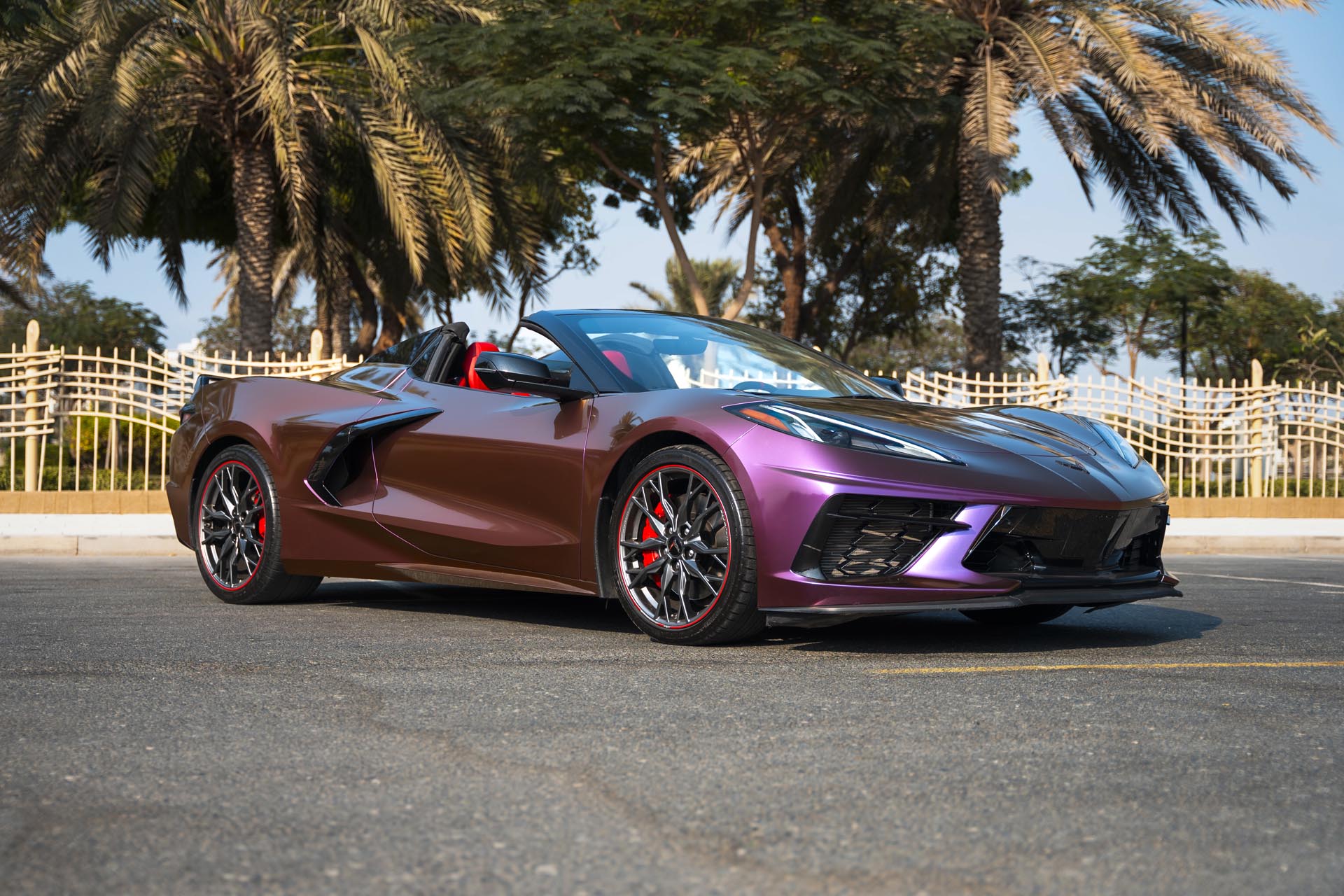
Dubai’s open-top season runs roughly from November to March, when daytime highs of 24 to 31°C and cool evenings make driving with the roof down comfortable at almost any hour. April and October are still usable if you plan around the middle of the day, and from May to September the honest answer is that midday is not a roof-down proposition, so drive after sunset or in the first hour after sunrise instead, with the air conditioning doing the rest.
Dubai weather by month and what it means for driving with the roof down
The table below is built from two different datasets, and each is labelled so you can see exactly what it covers. Daytime highs, night-time lows and rainfall totals come from the World Meteorological Organization’s 1991 to 2020 climate normals for Dubai International Airport (station 41194). Humidity is a ten-year mean calculated from hourly airport observations between 2015 and 2024, because no official published humidity normal for Dubai could be verified for this article, so treat it as a representative average rather than an exact figure.
| Month | Roof-down verdict | Daytime high | Night-time low | Humidity | Rainfall |
|---|---|---|---|---|---|
| January | All day | 24.4°C | 15.3°C | 58% | 20.8mm |
| February | All day | 26.1°C | 16.4°C | 57% | 9.9mm |
| March | All day | 28.9°C | 18.6°C | 53% | 21.7mm |
| April | Mornings and evenings | 33.7°C | 22.3°C | 45% | 3.3mm |
| May | After dark only | 38.2°C | 26.1°C | 42% | Effectively no rain |
| June | After dark only | 40.3°C | 28.6°C | 46% | Effectively no rain |
| July | After dark only | 41.5°C | 31.2°C | 46% | 1.1mm |
| August | After dark only | 41.9°C | 31.5°C | 45% | Effectively no rain |
| September | After dark only | 39.5°C | 28.9°C | 51% | Effectively no rain |
| October | Mornings and evenings | 35.9°C | 25.4°C | 54% | 1.5mm |
| November | All day | 30.7°C | 21.1°C | 54% | 5.9mm |
| December | All day | 26.5°C | 17.3°C | 57% | 14.8mm |
No published source for Dubai sea-water temperature could be verified for this article, so that column has been left out rather than estimated. Sunrise and sunset are worth pinning down too, because the «drive at these hours» advice throughout this guide rests on them. Computed by the US Naval Observatory for representative dates through the year, sunset falls as early as around 17:28 in late November and early December and as late as around 19:13 in late June and early July; sunrise is earliest at around 05:28 in June and latest at around 07:06 in January. Civil twilight adds roughly 24 to 26 minutes of usable light either side of those times, which matters if you are timing a drive around first or last light.
November to March, the peak open-top season
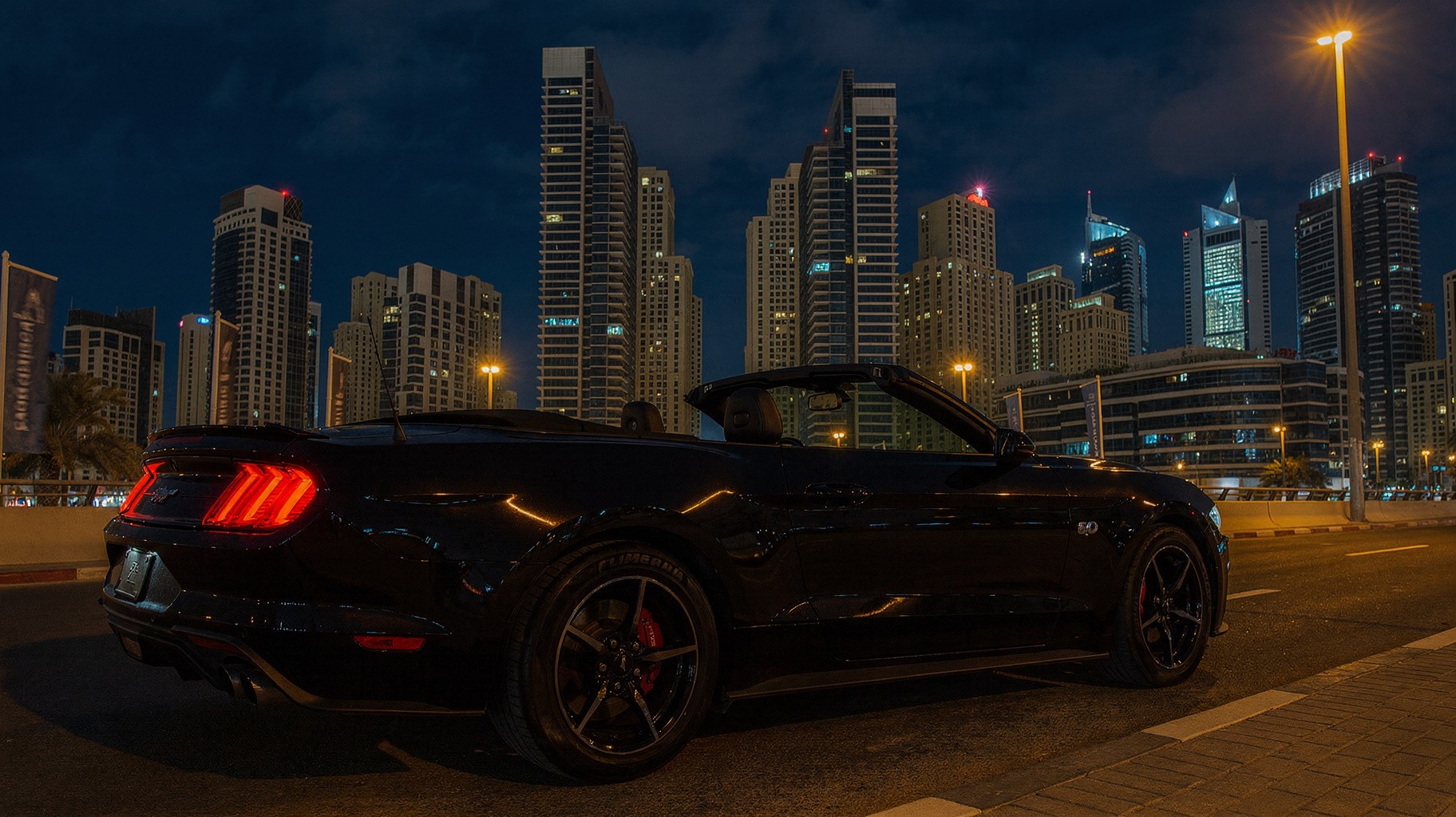
This is the window the whole article is built around. Daytime highs sit between 24.4°C in January and 30.7°C in November, night-time lows between 15.3°C and 21.1°C, and the air carries noticeably less moisture than in the shoulder or hot months. Practically, that means there is no hour of the day when the roof has to stay up. Midday is warm but pleasant with air moving through the cabin; the evening, once the sun is down and the light has gone soft and low, is where an open-top really earns its place, whether that is a slow run along the coast road, a loop through Downtown with the towers lit up, or a longer weekend drive out of the city on paved roads.
Helpful tipSave the longer routes for this window. Our own guide to scenic UAE drives and road trips covers the routes worth doing with the roof down; there is no need to repeat that detail here.
Alex Shvarov, Automotive expert with over 15 years of experience
These are also the busiest months to be in the city. Dubai’s Department of Economy and Tourism reported 19.59 million international overnight visitors for 2025, up 5% year on year, with hotel occupancy at 80.7%; December 2025 was the single busiest month on record, at 2.04 million visitors, just ahead of the previous record set in January 2025 at 1.94 million. That has nothing to do with what you pay to rent an open-top — Brook Drive’s rates do not move with the season — but it does mean fuller roads, fuller car parks near the popular spots, and a Downtown or Marina Walk that is genuinely busy after dark. A short window around Dubai Frame or the Marina Walk before sunset, rather than at the peak of the evening crowd, is a small adjustment that makes the same drive noticeably easier.
April and October, the shoulder months
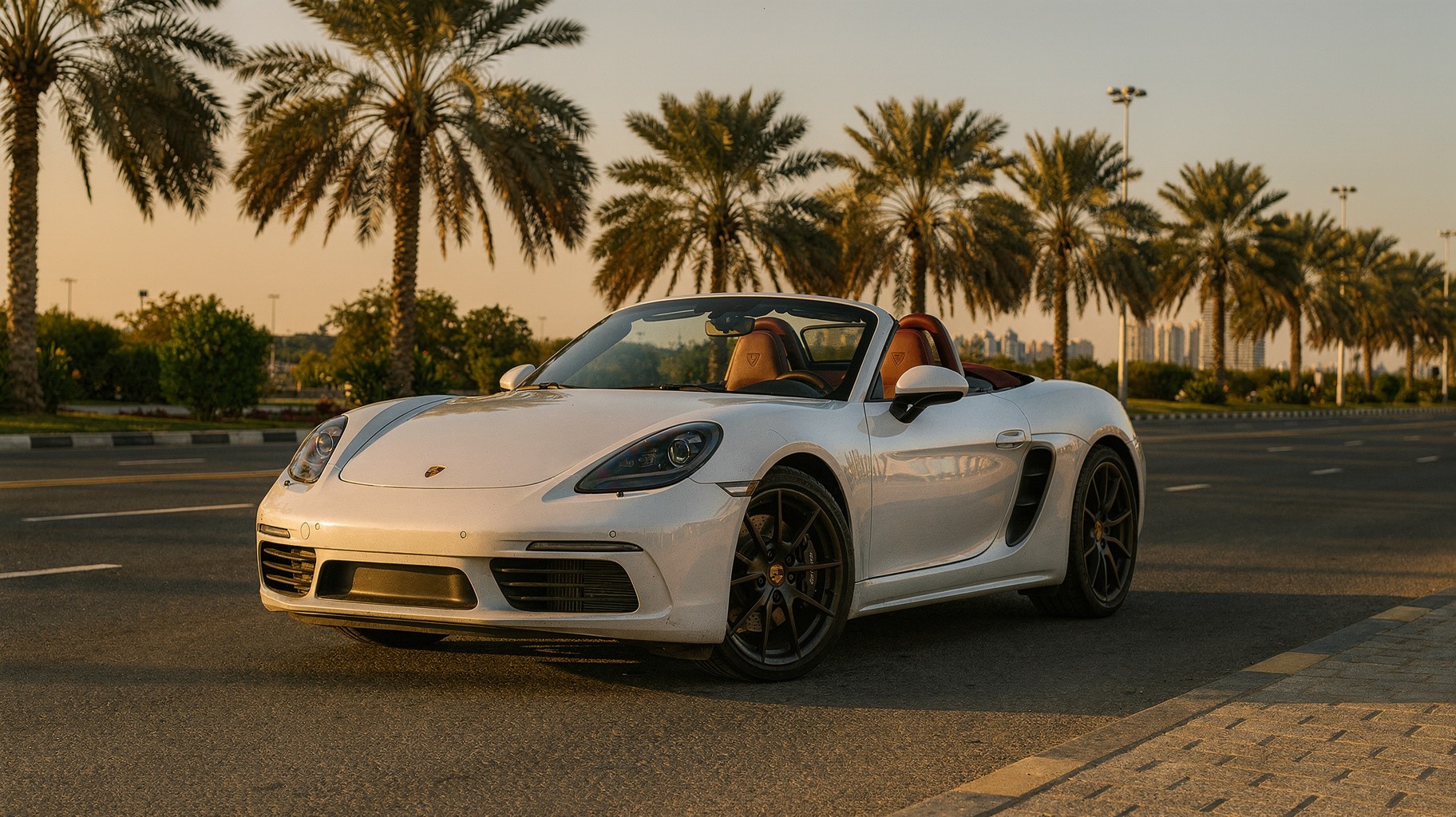
April and October are not the hot months, but they are not the peak either. Daytime highs reach 33.7°C in April and 35.9°C in October, against 30.7°C in November on one side and 38.2°C in May on the other, and the middle of the day in both months already runs hot enough that the roof is better up. The mornings and the late afternoons are a different story: hourly averages put April at around 25°C at six in the morning and 26.8°C by eight, and October at around 28°C and 29.1°C at the same hours, both genuinely comfortable with the roof down.
Helpful tipTake the roof down before about ten in the morning, put it back up through the middle of the day, and bring it down again from late afternoon. The same car, the same rate, just split across the two comfortable windows either side of the heat.
Alex Shvarov, Automotive expert with over 15 years of experience
A fixed-roof coupe is a reasonable alternative if you would rather not think about timing at all during these two months, but most visitors find the two-window pattern easy enough to work around once they know it is coming.
May to September, the worst time to visit Dubai for midday driving and what to do instead
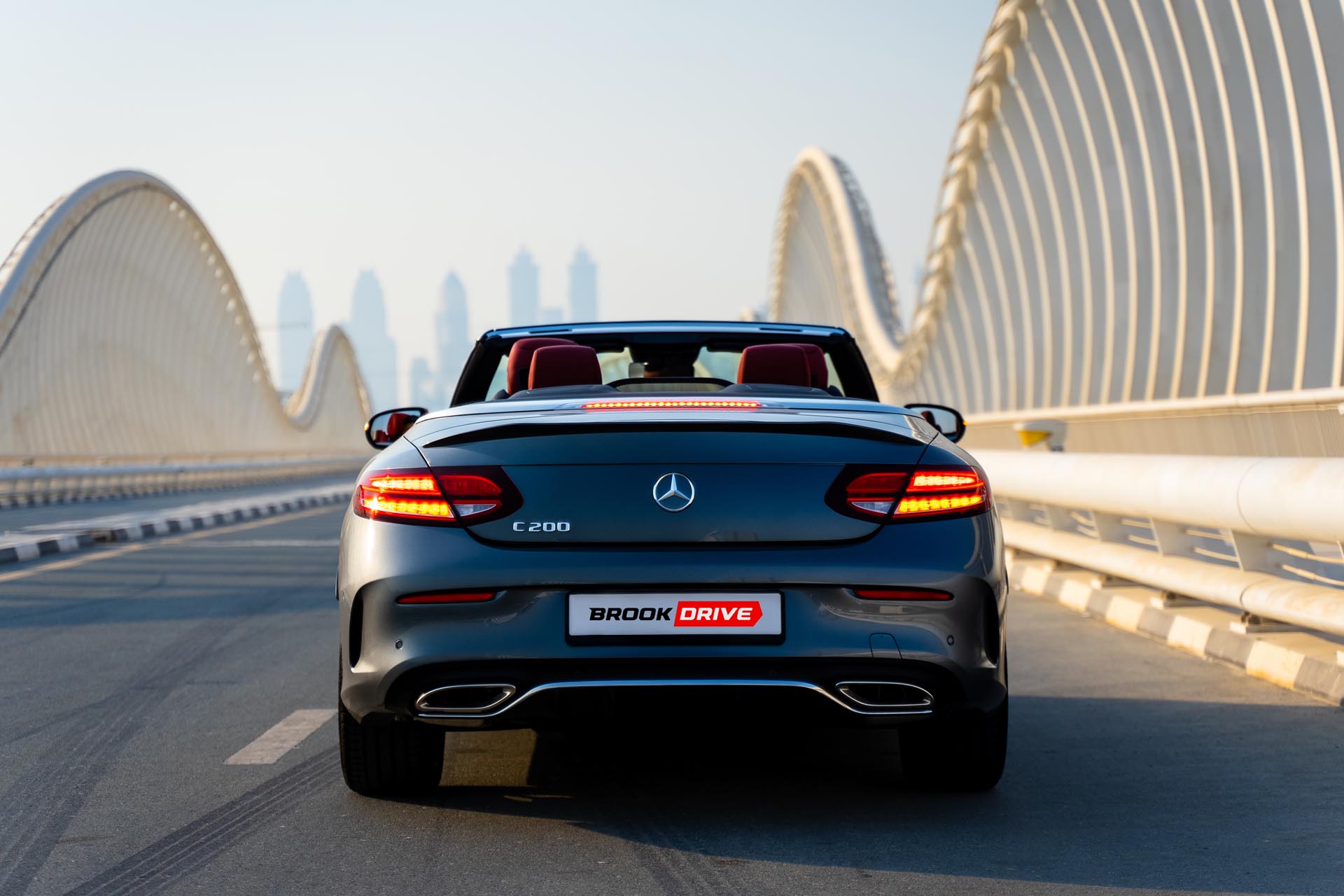
If someone is asking about the worst time to visit Dubai, this is the honest answer for anything done outdoors in the middle of the day. Daytime highs climb from 38.2°C in May to 41.9°C in August, and even the night-time low in August sits at 31.5°C. The right response is not to skip the convertible; it is to change when you use it. Drive at night, or in the first hour or two after sunrise, when the air is measurably cooler than the afternoon peak. Hourly averages for July show around 34°C at six in the morning and around 36.5°C at eleven at night, against 40°C in the mid-afternoon — a gain of up to six degrees if you drive in the early morning, or a smaller three-to-four-degree gain if you drive late at night, and worth being clear-eyed about either way: that is the least uncomfortable part of the day, not a cool one.
Humidity is part of why August feels heavier than June even though the two months’ relative-humidity figures are close (46% in June against 45% in August). What actually rises through the summer is the dew point, from around 21°C in June to about 22°C in July and August, alongside night-time lows that climb nearly three degrees over the same stretch. The air is carrying more moisture and staying warmer after dark, which is a fair description of why late summer feels heavier than early summer, even without a higher humidity percentage to point to.
Helpful tipPick a car with a hard top that folds away in about thirty seconds rather than a fabric roof, run the air conditioning with the roof down and the vents at neck height, and park in shade wherever it is available. A dark-trimmed interior left in direct sun for an afternoon is genuinely hot to touch before you have even started the engine.
Alex Shvarov, Automotive expert with over 15 years of experience
None of this means heading out to the dunes for relief. Driving on sand or any other unpaved surface voids the insurance on every car in the fleet, and there is no version of the summer workaround that involves leaving paved roads.
The weather you plan around, not just the heat
Temperature is not the only thing worth checking before you pick your dates. Three other patterns shape a Dubai trip: a short winter rain season, a summer dust wind, and a run of foggy winter mornings that affects visibility on the main roads.
The rain season and what to do if it starts with the roof down
Dubai’s rain is concentrated in the cooler part of the year. On the 1991 to 2020 normals, December, January, February and March together account for around 85% of the annual total of 79.2mm, and rain days are correspondingly rare through the rest of the year: an older reference period, 1974 to 1991, put average rain days at roughly two to four a month between December and March and close to none between May and October. Heavy rain is uncommon but not impossible — the UAE’s National Center of Meteorology recorded its heaviest rainfall in at least 75 years in April 2024, with Dubai International Airport receiving around 144mm in 24 hours, roughly two years’ worth of rain in a single day. That is a documented extreme, not a typical April.
If it does start raining with the roof down, the practical answer is simple: pull over somewhere safe, bring the roof up, and wait it out. Every convertible in the fleet has a powered roof that closes in well under a minute, and none of them are designed to be driven with the roof down in genuine rain.
The shamal wind and dust haze
The summer shamal is a hot, dry, north-westerly wind that blows over the Gulf typically from late May to mid-August, according to NASA’s Earth Observatory. Once wind speeds pass roughly 40km/h it lifts enough dust to cut visibility below the usual 3.5km dust-storm threshold, per the same source. In practice that means hazier daytime skies and a filmy look to the light on the windier days of high summer — one more reason the early morning and after-dark hours are the better time to have the roof down in this period.
Winter morning fog and driving visibility on Sheikh Zayed Road
Fog is a cool-season, early-morning phenomenon in Dubai. Calculated from ten years of hourly airport observations, fog-or-thick-mist was reported most often in December, at around 7% of hourly readings, followed by September and October at around 6%, and January and February at around 5.5%. Within the day it is sharply concentrated around dawn: in December, roughly a quarter of seven o’clock observations were coded as foggy, falling to under 1% by midday. The Roads and Transport Authority’s published safety guidance for fog is straightforward: use fog lights rather than high beam, since high beam reflects back and reduces visibility further; keep to the right side of your lane, away from oncoming traffic; increase your following distance; and only use hazard lights once you have stopped, to warn other drivers, not while moving. Reduced speed limits during fog are shown on the electronic gantry signs above Sheikh Zayed Road and should be followed as displayed, rather than assumed.
Helpful tipIf fog is forecast for the morning, do not cancel the drive — push it back an hour or two instead. The pattern above holds in every cool-season month: heaviest in the hour or so after sunrise, close to zero by the middle of the day.
Alex Shvarov, Automotive expert with over 15 years of experience
What actually makes an open-top comfortable in this climate
A convertible that works well in the Gulf is not just a car with the roof removed. A few features do most of the work. A powered roof that folds away in under a minute means you can drop it for a short window and put it straight back up rather than committing to an all-day decision. A wind deflector behind the seats cuts the buffeting at speed, which matters more here than it sounds, since it is the difference between a relaxed conversation and shouting over the wind on Sheikh Zayed Road. Air conditioning aimed at neck height, ventilated seats, and a light-coloured interior all reduce how hot the cabin feels even with the roof down and the sun overhead — a dark leather seat left in direct sun for an afternoon gets uncomfortably hot far faster than a lighter one. Where you park matters too: shade, or at least a covered spot, keeps the cabin liveable when you come back to it.
Whether a fabric or a folding hard top suits you better in this climate is a longer question with real trade-offs, and we have already answered it properly in our hard top versus soft top guide, so this article will not repeat that comparison. What follows instead is a short, independent look at how one convertible’s roof and cabin actually behave with the top down.
The following is an independent in-depth review of the Mercedes C-Class Cabriolet, covering how the roof folds and how the cabin feels with the top down; it was not filmed for Brook Drive and does not feature one of our cars.
Which open-top to rent and what it costs
Our convertible cars split into four rough tiers, and the rate for any of them is the same in July as it is in January — the lever that actually changes what you pay is how many days you book, not the month you book them in.
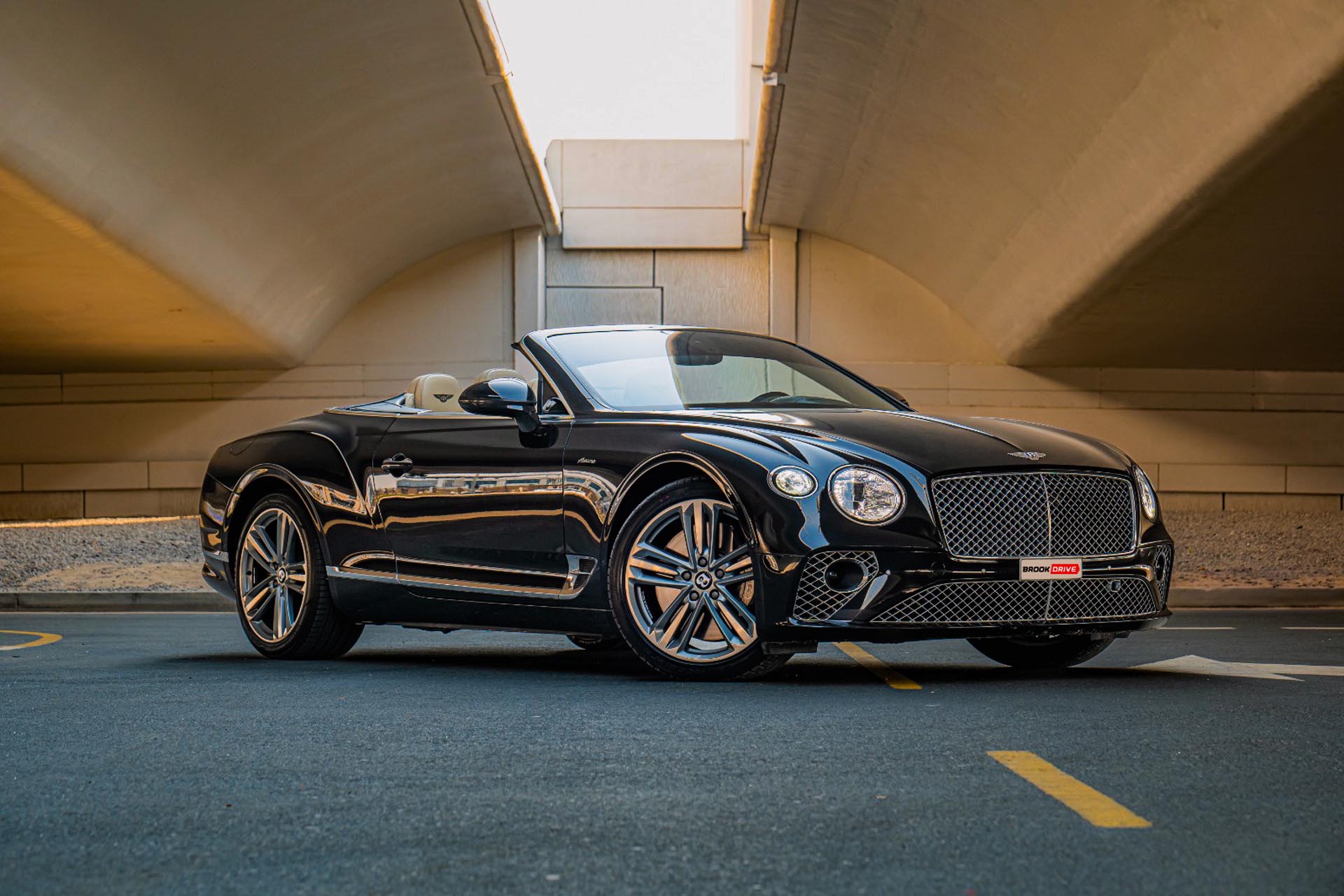
The everyday tier starts at AED 490 a day and covers the Mini Cooper S Convertible, the Mercedes C180 Convertible, the Ford Mustang Convertible and the Chevrolet Camaro Convertible — all economy cars in daily terms, though the Mustang and Camaro bring proper V8 muscle car character to that price. The mid tier runs from AED 600 to AED 690 and includes the Mercedes C-Class in its C200 Convertible form, the BMW 420 and 430 Convertibles, the BMW Z4, the Mercedes E200 Convertible, and the Ford Mustang GT 5.0 V8, currently listed under our Special Offer category. Sports open-tops run from AED 890 to AED 1,990 and include the Porsche Boxster in several forms, the Chevrolet Corvette C8 Stingray Convertible, the BMW M4 Competition Convertible, the Mercedes SL 55 AMG, the Audi R8 Spyder, and the Porsche 911 Carrera GTS Cabriolet and 911 Targa 4S — all of these belong under our sport cars listing. At the top, luxury and supercar open-tops run from AED 2,600 for the Bentley Continental GTC up to AED 7,490 for the Ferrari 812 GTS; the Lamborghini Huracán EVO Spyder sits in this bracket too, at AED 2,990 a day for one to two days.
| Tier / car | 1 to 2 days | 3 to 7 days | 8 to 29 days | 30+ days |
|---|---|---|---|---|
| Everyday — Mini Cooper S Convertible | 490 | 440 | 390 | 290 |
| Mid tier — Mercedes C200 Convertible | 600 | 550 | 500 | 300 |
| Sports — Porsche 718 Boxster | 890 | 790 | 690 | 590 |
| Luxury — Bentley Continental GTC | 2600 | 2500 | 2400 | 1820 |
Two worked examples show what the length-based discount actually means. Book the Mini Cooper S Convertible for thirty days or more and the rate drops from AED 490 to AED 290 a day, a 40.8% reduction per day, for a total of AED 8,700 across thirty days. Book the Mercedes C200 Convertible on the same terms and the rate halves, from AED 600 to AED 300 a day, exactly 50% less per day, for a total of AED 9,000 across thirty days. Neither figure has anything to do with which month you book; the same discount applies whether the thirty days fall in February or in August.
Open-tops that work for a family of four in the cool months
Not every open-top in the fleet is built for four. The Ford Mustang Convertible, the Chevrolet Camaro Convertible, the Mercedes C-Class and E-Class Convertibles and the BMW 4 Series Convertible are the four-seat body styles in the range, unlike the two-seat Boxsters, Spyders and supercar convertibles further up it. Check the seat count on the car’s own page before you book, since it varies by version. Child seats are free on any booking. The cool months, roughly November to March, are what make a four-seat open-top genuinely pleasant with children in the back — nobody is fighting over whether the roof stays up, and there is no midday heat to manage around a car seat.
Practical rental notes for planning your dates
A few booking mechanics stay the same whatever month you pick, and they are worth knowing before you fix your dates. There is no deposit on any car in the fleet — no cash deposit and no card hold — and basic insurance is included in every daily rate. The minimum rental is one day; there is no hourly rental. Minimum age and driving experience are set per car rather than as one company-wide rule, so check the figure for the specific model you want.
Tourists need a passport, a home-country driving licence and an International Driving Permit; UAE residents need a UAE driving licence and an Emirates ID. Our documents guide covers this in full if you want the detail before you book. Each car has its own mileage limit, typically 200 to 250km a day, with extra kilometres charged separately, and fuel is full-to-full so there is no fuel charge to settle beyond refilling the tank yourself. Salik and Darb toll charges, along with any traffic fines, are billed separately after the rental ends rather than taken as a deposit — our Salik and toll roads guide explains how that billing works. Driving is permitted anywhere in the UAE; taking the car into Oman is not allowed.
Helpful tipDelivery within Dubai is free on rentals from AED 10,000; otherwise it is AED 185 between nine in the morning and nine at night, AED 235 overnight, plus 5% VAT, and delivery to Dubai International Airport starts from AED 250. Handover takes about twenty minutes and the office runs 24/7, which is what makes a six o’clock morning start or a midnight pickup realistic if that is when you want the roof down. Our step-by-step rental guide walks through the whole process.
Alex Shvarov, Automotive expert with over 15 years of experience

Automotive expert with over 15 years of experience in the premium and sports car industry. I specialize in luxury vehicle selection, performance analysis, and creating exceptional driving experiences for discerning clients.
Frequently asked questions about timing and renting a convertible in Dubai
What is the best month to visit Dubai for driving with the roof down?
Anywhere from November to March, based on WMO 1991 to 2020 normals for Dubai International Airport: daytime highs of 24 to 31°C and cooler evenings make the roof-down window an all-day one throughout this period.
Is a convertible bearable in a Dubai summer?
Not at midday, when highs reach 38 to 42°C between May and September. It is genuinely usable at night and in the first hour or two after sunrise, when the air runs several degrees cooler, helped by air conditioning with the roof down.
Does it rain in Dubai, and when?
Most of Dubai’s rain falls between December and March, adding up to a modest annual total of around 79mm on the 1991 to 2020 normals. Heavy rain outside that window is rare, though not impossible, as the exceptional storm of April 2024 showed.
Is there fog in Dubai, and does it affect driving?
Fog is a winter and autumn morning phenomenon, most frequent in December, September and October, and it clears by midday. The RTA advises fog lights rather than high beam, extra following distance, and staying to the right side of your lane; reduced speed limits are shown on the road’s electronic signs.
Do convertible rental prices change by season in Dubai?
No. Brook Drive’s daily rates are the same in July as they are in January. The only thing that changes the price per day is how many days you book, from the 1 to 2 day rate down to the 30+ day rate.
Can four people fit in a convertible rental in Dubai?
Yes, in the right model. The Ford Mustang and Chevrolet Camaro Convertibles, the Mercedes C-Class and E-Class Convertibles and the BMW 4 Series Convertible are four-seat body styles; the Boxsters, Spyders and most supercar convertibles are strictly two-seaters. Check the seat count on the car’s own page before you book.
Do I need an International Driving Permit to rent a convertible in Dubai?
Tourists need a passport, their home-country driving licence and an International Driving Permit. UAE residents use a UAE driving licence and Emirates ID instead.
Can I take a rental convertible out of the UAE?
You can drive anywhere within the UAE. Taking the car into Oman is not allowed.
What about Salik and toll charges on a rental?
Salik and Darb toll charges are billed to you separately after the rental ends, in the same way as fuel and any traffic fines, since Brook Drive does not take a deposit against them.
What is the worst time to visit Dubai if I want to drive with the roof down?
May to September, for anything in the middle of the day. Daytime highs of 38 to 42°C make an open cabin uncomfortable between roughly ten in the morning and six in the evening; night and early-morning driving remain genuinely workable across the same months.