

 Sports
 Convertible
 Luxury
 SUV
SUV Family
 Coupe
Coupe Muscle
 Pickup Truck
 Sedan
Sedan Electric
 Economy
 Lamborghini
 McLaren
 Ferrari
 Rolls Royce
 Bentley
 Porsche
 BMW
BMW Mercedes
 Mini Cooper
 Hyundai
 Cadillac
 Audi
Audi Ford
Ford Tesla
Tesla Lincoln
 GMC
GMC Mazda
Mazda Jeep
Jeep Fiat
Fiat Hummer
 Lexus
Lexus Dodge
Dodge Land Rover
 Nissan
 Chevrolet
 Toyota
 Lixiang




In 2025, Dubai’s traffic fine enforcement is fully digitized, with instant checks and payments via official apps and portals. Ignoring fines leads to serious consequences: blocked vehicle registration (Mulkiya renewal), accumulation of black points on your license, and potential travel bans imposed by court rulings. If you rent a car from Brook Drive, it’s critical to understand these risks — unpaid fines can freeze your departure at the airport and trigger legal action. This guide explains what happens if you don’t pay, how to avoid penalties, and how to resolve fines remotely, even after leaving the UAE.
Legal Consequences of Unpaid Traffic Fines
Failing to pay traffic fines in Dubai triggers a cascade of financial, administrative, and legal consequences that escalate quickly. Here’s what you’re facing:
1. Financial Penalties and Late Fees
Late payment doesn’t incur daily interest in the traditional sense, but unpaid fines accumulate administrative penalties and prevent you from accessing government services. If you exceed the 60-day payment window (detailed below), penalties double, and enforcement actions intensify. For tourists renting cars, unpaid fines may result in additional charges from the rental company — sometimes appearing weeks after you’ve returned home.
2. Administrative Blocks: Mulkiya and License Renewal
Outstanding fines immediately block your ability to renew vehicle registration (Mulkiya) and driver’s license. This applies to both UAE residents and tourists who plan to return. If you accumulate 24 black points within a year, your license is suspended regardless of payment status. Each fine carries a specific black point value (4–23 points depending on severity), and serious violations like running a red light or exceeding speed limits by 60+ km/h add up fast. One reckless weekend can cost you your driving privileges for months.
3. Vehicle Impoundment and Court Cases
For severe or repeated offenses, Dubai Police can impound your vehicle for 30–60 days. Fines for these violations can reach 50,000 AED. If you fail to settle fines or appear in court, a formal police case is opened, and you may face arrest warrants or travel bans. Modern cameras and AI enforcement systems (including speed radars, red-light detectors, and mobile units) operate 24/7, making evasion nearly impossible.
For drivers who want to minimize risks, rent Tesla in Dubai — advanced autopilot systems help maintain speed limits and reduce the chance of unintentional violations. It’s not foolproof, but it’s a smart layer of protection.
4. Travel Bans and Airport Detention
While there is no automatic AED threshold that triggers a travel ban (e.g., 10,000 AED), courts can impose travel restrictions for serious or unresolved cases. If a judge rules a travel ban due to unpaid fines or ongoing prosecution, immigration officers will detain you at Dubai International Airport until the matter is resolved.
This is particularly risky for tourists who assume rental companies will handle everything — if the deposit doesn’t cover the fines, you remain personally liable. Imagine standing at passport control, bags packed, flight boarding, only to be told you can’t leave until you settle a 3,000 AED fine from two weeks ago. It happens.
Reliable SUVs for Long-Term Replacement
If your personal vehicle is impounded or you need a temporary replacement during a legal hold, Brook Drive offers flexible monthly rental options with significant discounts:
| Model | Daily Price | Monthly Price (30+ days) |
|---|---|---|
| Nissan Patrol White Platinum City | 990 AED/day | 690 AED/day |
| Chevrolet Tahoe White | 790 AED/day | 590 AED/day |
| Cadillac Escalade Sport Platinum | 1290 AED/day | 890 AED/day |
| Toyota Land Cruiser 300 White | 650 AED/day | 590 AED/day |
For Tourists: Rental Car Deposits and Departure Risks
When you rent a car in Dubai, the rental company places a hold (deposit) on your credit card to cover potential fines. However, fines don’t appear instantly in the RTA and Dubai Police databases — processing takes 2–14 days depending on the violation type (mobile radar fines appear faster, manual tickets take longer). This delay creates two major risks for tourists:
- Frozen Funds: Even after you return the car, your deposit remains blocked until all fines are processed and paid. This can take up to 30 days. Your credit limit stays tied up, potentially disrupting other travel expenses.
- Unexpected Charges: If fines appear after the deposit is released, the rental company will charge your card or escalate the matter to Dubai Police, who will register the debt under your name and passport number. You might not find out until your next visit — or when you try to re-enter the UAE.
To avoid these hassles, Brook Drive offers a unique advantage: rent luxury car in Dubai without a deposit. This means no frozen funds, no surprise deductions weeks after your trip, and full transparency. You pay only for confirmed fines (if any) before departure, keeping your budget predictable.
Popular Deposit-Free Rentals for Tourists
Here are some of our most popular models available with zero deposit:
| Model | Price Per Day | Min Age | Link |
|---|---|---|---|
| Ferrari F8 Spider Red | 3390 AED | 25 | View |
| Lamborghini Huracan Evo Spyder Red | 3390 AED | 25 | View |
| Porsche 911 Turbo S | 2290 AED | 25 | View |
| BMW 420 Convertible | 790 AED | 21 | View |
Important: You are personally responsible for all fines, even if the rental company hasn’t charged you yet. Before leaving Dubai, check your fines online (instructions below) and pay them to avoid immigration issues on future visits. It’s a small step that saves massive headaches later.
Payment Deadlines and Discount Schemes (2025)
Contrary to outdated information, the official payment deadline for traffic fines in Dubai is 60 days from the date of the violation notice — not 15 days. Here’s how the payment timeline works in 2025:
- First 30 days (Grace Period): Pay with a 25% discount. This discount replaced the old 50% scheme and now applies uniformly across all fines. A 1,000 AED fine becomes 750 AED if you act fast.
- Days 31–60: Full fine amount, no discount. The clock is ticking.
- After 60 days: Fines double, and enforcement actions (license suspension, travel bans, court cases) may begin. A 1,000 AED fine becomes 2,000 AED, plus administrative penalties.
Additionally, Dubai offers installment plans for fines exceeding 5,000 AED. You can apply for 3–12 month payment plans through participating banks, but you must settle the debt before renewing your Mulkiya or leaving the country.
For budget-conscious drivers, consider optimizing your rental costs: monthly car rental in Dubai can save you up to 50% compared to daily rates, freeing up funds to cover unexpected fines without stress. It’s a practical way to balance mobility and financial flexibility.
How to Check and Pay Dubai Fines Online
Dubai’s digital infrastructure allows you to check and pay fines remotely, even after leaving the UAE. Here’s a step-by-step guide:
1. Dubai Police App (iOS/Android)
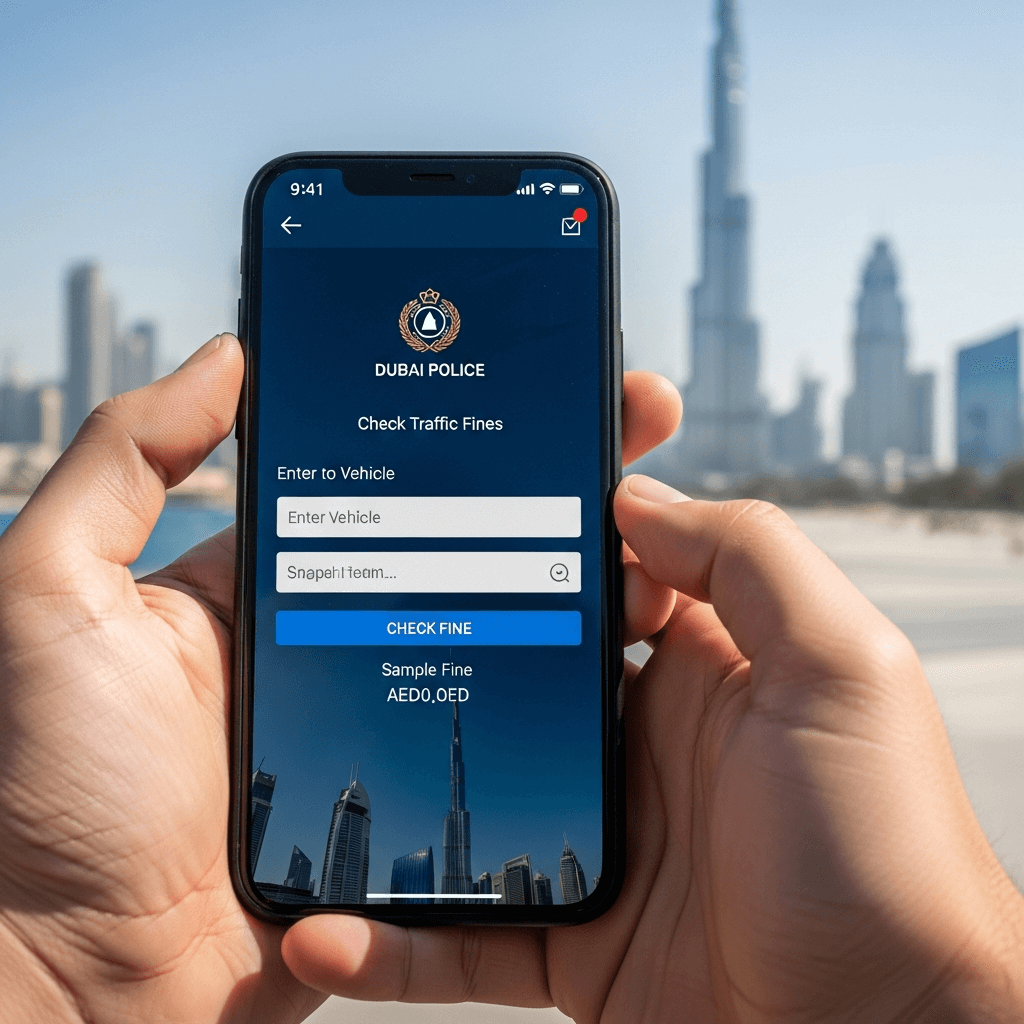
Download the official app, enter your vehicle plate number or traffic file number, and view all fines. Payment is integrated via credit/debit card. The interface is straightforward — you’ll see fines listed with dates, amounts, and violation types.
2. RTA Website
Visit the Roads and Transport Authority portal, select «Public Transport and Roads,» and search for fines by plate number. This covers Salik toll charges and parking violations in addition to traffic fines. It’s a one-stop shop for all road-related penalties.
3. Ministry of Interior (MOI) Portal
Use your Emirates ID or passport number to access a unified view of all government fines, including traffic, residency, and municipal penalties. This is particularly useful for residents tracking multiple fine categories.
4. Smart Kiosks
Located in malls, metro stations, and service centers across Dubai, these kiosks accept cash and card payments for instant clearance. If you prefer face-to-face confirmation, this is your option.
All platforms support remote payment, so tourists can resolve fines from anywhere in the world. For drivers of high-performance vehicles, we recommend checking fines weekly to avoid accumulating black points. For example, if you rent sport cars in Dubai, minor speeding violations can add up quickly — reaching 24 black points results in automatic license suspension, regardless of payment status. Stay on top of it.
How to Dispute an Incorrect Fine
If you believe a fine was issued in error (wrong plate number, camera malfunction, etc.), you can file an objection through the Dubai Public Prosecution system:
Online Submission
Visit the Dubai Public Prosecution website or use the official app to file a complaint under «Objection on Traffic Violation.» The process is digital and relatively fast.
Provide Evidence
Upload photos, dashcam footage, or rental agreements proving the error. Common grounds include: vehicle was sold/not in your possession, radar calibration issues, or administrative mistakes. The more documentation you provide, the stronger your case.
Review Process
The prosecution reviews your case within 10–15 days. You may be asked to attend a hearing or provide additional documentation. Be prepared to follow up if needed.
Outcome
If the objection is upheld, the fine is canceled. If denied, you must pay within the remaining grace period or appeal to traffic court. Appeals are rare but possible for serious disputes.
Keep all rental agreements, handover documents, and timestamps to support disputes. Brook Drive provides detailed rental contracts and vehicle condition reports to help clients contest wrongful fines. We’ve seen cases where tourists were fined for violations that occurred after they returned the car — proper documentation resolved these disputes quickly.
Practical Tips to Avoid Fines in the First Place
Prevention is always better than cure. Here are some actionable tips to minimize your risk of traffic fines in Dubai:
- Use GPS and Speed Alerts: Most modern rental cars (including all Brook Drive vehicles) come with built-in GPS and speed limit warnings. Pay attention to these alerts, especially on highways where limits change frequently.
- Understand Black Point Thresholds: Familiarize yourself with which violations carry the most black points. Running a red light (12 points), reckless driving (23 points), and excessive speeding (12–23 points) are the biggest threats to your license.
- Check Fines Weekly: If you’re renting for more than a few days, check the Dubai Police app or RTA portal weekly. Early detection means you can take advantage of the 25% discount and avoid accumulation.
- Avoid Peak Traffic Hours: Aggressive driving and sudden lane changes are more likely to be flagged during rush hours (7–9 AM, 5–8 PM). Plan your routes to avoid congestion and reduce stress.
- Respect Salik Toll Gates: Salik charges are automatic, but if your rental company hasn’t registered your plate correctly, you may incur fines. Verify Salik registration when you pick up the car.
These small habits can save you hundreds — or thousands — of dirhams over the course of a trip.
Frequently Asked Questions
Can I be stopped at the airport for unpaid traffic fines?
Yes, but it depends on the severity and amount. Minor unpaid fines (e.g., 500–1,000 AED) rarely trigger airport detention. However, if a court has issued a travel ban due to serious violations, unresolved legal cases, or accumulated debts, immigration officers will prevent your departure until the matter is cleared. This is more common for residents than tourists, but tourists with multiple serious violations (e.g., reckless driving, DUI) can also face detention. The safest approach? Clear all fines before you head to the airport.
Do traffic fines transfer to other GCC countries?
As of 2025, there is no confirmed unified GCC database that instantly flags violations across borders (UAE, Saudi Arabia, Oman, Qatar, etc.). However, bilateral agreements allow data sharing for serious offenses. If you accumulate fines in Dubai and later try to enter another GCC country, authorities may request payment or deny entry, but this is case-by-case rather than automatic. The safest approach is to clear all fines before traveling within the region. Don’t assume borders will protect you from unpaid debts.
Can I re-enter the UAE with unpaid fines?
Possibly, but with risks. Dubai immigration links fines to your passport number. If you have minor unpaid fines, you may be allowed entry but flagged for follow-up. If you have a travel ban or court case, you will be detained at passport control until the debt is settled. To avoid complications, check and pay all fines online before your next trip. Brook Drive clients receive reminders and support to verify fine status before departure — we’ve helped dozens of tourists avoid last-minute airport surprises.
What happens if I ignore fines from a rental car?
The rental company will charge your card for the fine amount plus an administrative fee (typically 50–100 AED per fine). If your card is declined or the deposit has been released, the company will escalate the matter to Dubai Police, who will register the debt under your passport number. You’ll be personally liable, and the fine will follow you on future UAE visits. Always verify fine status before returning the car and leaving the country.
How long do black points stay on my license?
Black points remain on your license for one year from the date of the violation. If you accumulate 24 points within that year, your license is suspended. After the one-year period, points are automatically removed, but the fines must still be paid. You can check your black point balance via the Dubai Police app or MOI portal.